The Wall Has Moderators Now: Thirty Days in a Mural's Reply Thread

The first time somebody told the wall to shut up, it was 9:40 on a Tuesday, and the wall took it pretty well.
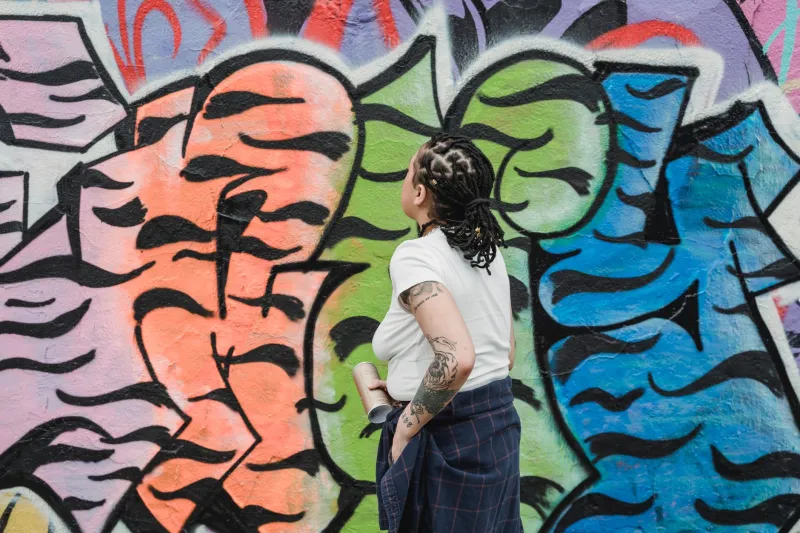
The wall in question is the north face of a shuttered laundromat on the edge of Providence's Olneyville neighborhood — two stories of faded cream stucco with a mural of a woman carrying a folding table through a rainstorm. It's good. It's also, as of this fall, argumentative. A small enamel plate sits at eye level near the corner, and if you point your phone at it, the wall opens a thread.
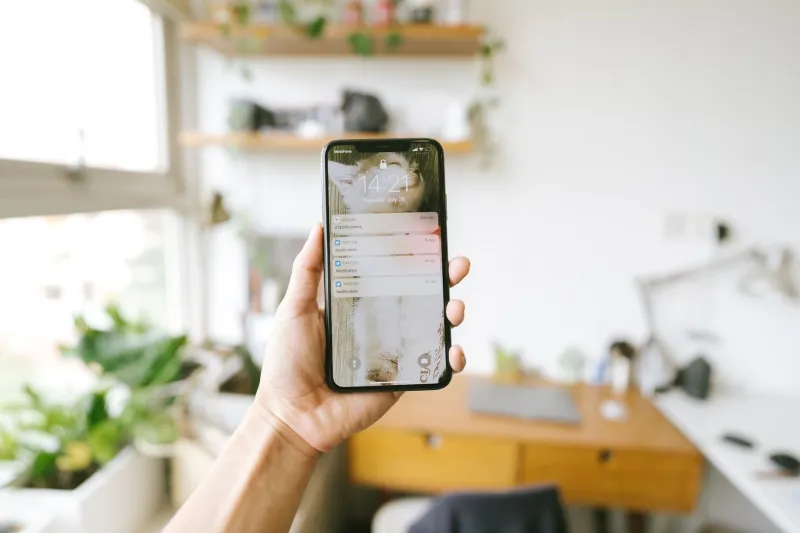
No app. No download. Scan, and a web page loads with a live comment layer keyed to the wall's geometry — pin your phone at the paint and the comments float over the figures like a very local, very opinionated subtitle track. There's a plain list view too, for anyone who'd rather read it sitting on the bus.
The crew behind it calls itself Second Read — four people, two of whom paint and two of whom mostly ship code, plus a shared group chat that has become, functionally, a moderation queue. Marisol Vega and Dev Okafor handle the wall; Priya Raman and a guy who goes by Tollbooth handle the layer. They've done three walls this way. This is the one I followed for a month.
Week One: The Wall Gets Adopted
The thread opened with about forty comments in the first three days, most of them some version of oh this is cool. By day five, the dedications started.
For my grandmother, she sold at this corner for 19 years.
RIP Ant, we still owe you $12.
That second one got pinned. Second Read has a loose policy: they pin what the block repeats, they delete slurs and threats and addresses, and they leave almost everything else, including the stuff that stings. Vega told me the goal was never a comment section in the YouTube sense. "It's more like the sidewalk in front of the wall got wider," she said. "People already talk to murals. They just do it out loud, to nobody. This just writes it down."
By the end of week one, one commenter had renamed the pigeon in the lower left corner Gerald. Gerald was not, at the time, a pigeon anyone had thought much about.
Week Two: The Insults Arrive
Week two is when a wall finds out it's public.
A man who signed his comments "Real Talk" posted eleven times in four days. The gist: the mural was ugly, the neighborhood was going downhill, and the crew should be arrested for defacing property that, per a quick check of city records, the crew had permission to paint.
What surprised me wasn't the trolling. It was the response time. Raman had it flagged within twenty minutes, not because it violated policy — it didn't — but because the layer gets noisy when one person posts eleven times, and noise is the thing that actually kills these projects. "The failure mode isn't hate," she said. "It's a thread that gets boring."
So they slow-rolled him. Rate limits, no deletes. Real Talk kept posting. Two regulars started replying to him with restaurant recommendations. By Saturday he was arguing about parking, which is the most Providence possible outcome.
Week Three: The Corrections
This is the week the wall stopped being a statement and started being a document.
A woman commented — politely, but with citations — that the bird in the lower left was not a pigeon. It was a peregrine falcon, and she knew because she'd watched a pair nest on the church tower two blocks over for six years.
Another commenter noted that the mural's backdrop was wrong: the awning in the painting was green, and the awning that used to be there, before the laundromat closed, was red. She had photographs. She posted them.
And a third person pointed out, correctly, that the rain in the mural falls at an angle that would only happen if the wind were coming from a direction the building blocks.
None of this was hostile. All of it was true. Which raised a question Vega hadn't planned for: what do you do when the wall gets fact-checked by people who were there?
Week Four: Gerald Gets a Name
Here's what they did. On a Sunday, Vega and Okafor repainted two details: the awning went red, and the bird — still not quite a peregrine, now closer — got a small brass-colored tag on its leg with the letters G-E-R.
They didn't announce it. They let the thread find it.
It took nine hours. The first comment was a single line — hold on — and then a screenshot, and then about sixty people losing their minds over a bird. Someone posted a photo of a cake with Gerald written on it in frosting. A kid from the block, who comments under the handle tinyboots, claimed credit for the original name and was immediately, unanimously believed.
That's the part that gets me. The thread didn't just react to the mural. It edited it, and then the mural reacted back, and now there's a bird with a leg tag and a cake.
What a Wall Owes a Thread
Here's the less charming part: someone has to sit with this thing.
Moderating a mural is a group chat that never closes. Raman checks the queue at 7 a.m. and 11 p.m. There are disagreements inside Second Read about how much to cut — Okafor wants to leave everything short of threats, Raman wants a cleaner read, Vega usually breaks ties by asking, "Would this person say it to a neighbor's face?" Sometimes the answer is yes and the comment stays and it's ugly and that's the deal.
There's also the capture problem. Comments get screenshotted and reposted off-platform, where the context evaporates. A dedication becomes a joke. An insult becomes a controversy. The wall can't follow its own thread out into the feed.
And there's the ownership question nobody has answered: the wall is on private property, the layer is on someone's server, and the thread belongs to a block. Three different kinds of claim, all pointing at the same paint.
Vega's take is simpler than mine. "A mural used to be a sentence," she said. "Now it's a conversation that happens to be load-bearing."
On Halloween the thread got a comment from an account with no avatar, no history, one line: this wall is the only thing on this block that answers back.
Nobody pinned it. Nobody had to.