Drop Zones: The Street Artists Skipping the Wall and Going Straight to Your Lock Screen
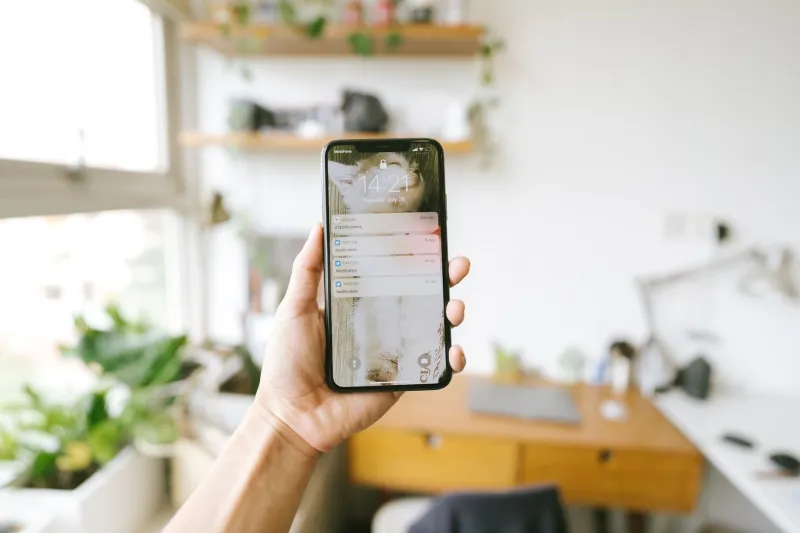
The first one caught me on a corner in Bushwick, somewhere between a bodega and a wall that gets repainted every six weeks. My phone buzzed against my leg. A share request from a device named wetpaint.raw: one image, 2.4 megabytes, titled untitled_final_FINAL_v3.jpg.
I took it. It was a photograph of the wall I was standing in front of — but not how it looked that afternoon. Same corner, same bricks, same tag on the roll-down gate, except the mural had been finished, and the sky behind it was wrong, a flat violet that doesn't happen in Brooklyn in the fall. Someone had painted the wall in their head and then sent me the proof.
That's the whole trick, and it's spreading.
The Ping Is the Piece
The technique is almost embarrassingly simple. AirDrop on iOS, Quick Share on Android, or a dirt-cheap Bluetooth beacon zip-tied behind a drainpipe or tucked into a hollowed-out brick. Stand close enough and your phone does what your phone does: it asks if you'd like to receive something from a stranger.
Most people decline. A few don't. That's the entire distribution model, and for the crews doing it, a five percent hit rate is a sold-out show.
What gets sent varies by the block. Some artists push a single high-res image — the wall as it looked before the buff, or as it might look if the landlord ever let them finish. Others send audio: a thirty-second field recording of the wall being painted, cans rattling in a bucket, the ambient noise of the exact intersection you're standing on. One crew in Chicago reportedly sends a text file that's just a list of every writer who's touched that wall since 2011. No pictures. Just names, like a guestbook you can't sign.
"It's the cheapest gallery in the world," a painter who goes by Sable told me outside a warehouse in Kensington, Philadelphia. She's been running drops off a beacon hidden in a utility box for most of this year. "No permits. No landlord. No Instagram deciding who sees it. I put it in the air and whoever's walking by catches it or doesn't. That's it. That's the whole career."
Etiquette Is Still Under Construction
Here's where it gets messy. A mural doesn't demand anything from you. An unsolicited file transfer does.
Some crews treat it like a business card — one image, no follow-up, name the device something readable so the recipient knows what they got. Others lean into the prank. I've heard reports of drops that deliver a single thirty-minute audio file of a man breathing, or a photo of the recipient's own face taken from a window across the street. Funny in a group chat. Less funny at 11 p.m. on a dark block.
The unwritten rules, as best I can piece them together from talking to people who do this: one drop per person per visit, nothing over ten megabytes, never send twice if they decline the first time, and never — never — use the feature on a train, a plane, or anywhere people can't walk away.
"There were guys doing it on the L train last spring and it ruined it for everybody," Sable said. "Now people see a share request and they flinch. That's not the feeling you want in the air."
No Gallery, No App, No Receipt
What makes this different from the QR-code mural wave is what happens after. There's nothing to scan again. No link to bookmark, no account to follow, no analytics dashboard counting impressions. The file lands in your camera roll or your downloads folder and it's yours, unwatermarked, uncredited unless the artist bothered to embed a name.
Which means the archive is you.
A curator in Los Angeles who's been cataloging these drops for a couple of years — she asked me not to print her name, because half the files she has were technically received without clear provenance — described it as "a museum with no building and no accession numbers. If I don't save it, it never existed. And the person who made it might not have saved it either."
She's got a folder of a few hundred images. She can't verify most of them. She keeps them anyway.
The flip side is that there's no accountability baked in. A QR code points somewhere. An AirDrop is a handoff. Once the cache clears or the recipient wipes the download, the piece is gone in a way that a painted wall never quite is — and the artist has no idea whether anyone saw it at all.
The Spoofing Problem
Then there's the part nobody in the scene likes talking about on the record.
The device name is whatever the sender wants it to be. That's true of AirDrop and Quick Share alike, and it's been true for years. The same trick that lets a crew label itself wall_drop_04 also lets anyone label themselves something that looks official, or familiar, or like the name of a person you actually know.
There have already been documented cases of people using proximity sharing to harass strangers — the infamous "cyber flashing" incidents that got airlines and transit agencies to tighten defaults. Street art drops are riding on the same rails, and they get tarred with the same brush even when the intent is aesthetic rather than predatory.
Security researchers have pointed out the obvious for a while now: proximity sharing is not a secure channel, and receiving a file is not the same as trusting its contents. A JPEG is a JPEG. An HTML file is not. And an .apk from a stranger on a sidewalk is exactly what it sounds like.
Most of the crews I spoke to know this. A few have started sending only in formats that can't execute — plain images, plain audio, PDFs. One organizer in Portland told me his rule is blunt: "If it can run, it doesn't go out. Ever."
What's Left After the Cache Clears
The thing that keeps pulling me back to this isn't the technology. It's the weird, temporary intimacy of it. You're walking down a street with your headphones in, and for one second, someone standing thirty feet away asks — through the most bureaucratic-sounding prompt your phone can produce — whether you'd like to see something they made.
You say yes or you say no. Either way you keep walking.
A mural stays up for years and mostly gets ignored. A drop lasts the length of a crosswalk and, if it works, it lands somewhere permanent — in your pocket, in your photos, in the little scroll you'll do tonight in bed when you're supposed to be asleep.
Sable put it better, and then immediately asked me not to quote her, and then said I could quote her anyway: "Paint fades. Files get screenshotted. I'm not sure which one of those is the real legacy anymore."
The beacon on the utility box kept blinking while we talked. Two more phones must have walked past it before we finished. I don't know what they got. I hope they took it.