Paint With an Expiration Date: Nine Walls, Three Climates, and the Case for Murals That Leave
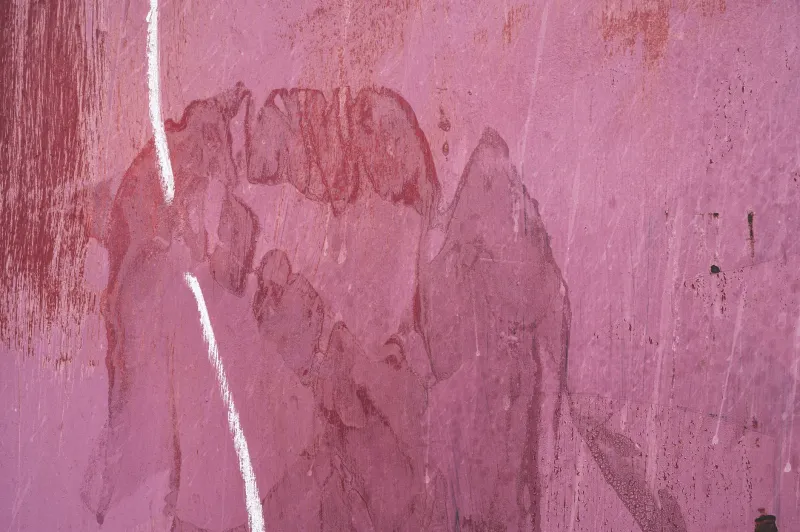
On a Saturday morning in Tucson, a mural began dying in public. It wasn't a vandal's work or a city crew's gray rectangle. The piece—a low-slung desert scene in faded coral and dusty turquoise—had been painted with a binder designed to break down under UV, moisture, and microbial attention. The crew called it a capture window, not a commission. Their job was to give the feed something to shoot, then let the wall go back to being a wall.
That's the premise behind Vanishing Coat, a loose field test I followed across three US cities this fall. The project pairs street artists with biodegradable paint systems and a simple rule: no touch-ups after day one. Each piece gets photographed, scanned, and documented like a normal mural. Then it gets left alone. Weather does the editing.
The question isn't whether the paint can disappear. It can. The question is whether disappearing is the next ethical frontier for feed-native street art—or just planned obsolescence with a nicer story.
The Test: Same Wall Logic, Three Different Skies
The setup was deliberately unglamorous. Three crews in Tucson, Milwaukee, and Asheville each painted three walls using the same basic material kit: a starch-based binder, mineral pigments, and a UV-fading topcoat that starts losing saturation once it's exposed to direct sun. The artists were told to paint something worth photographing, not something worth preserving. No protective clear coat. No anti-graffiti film. No return visits with a brush.
Grafedia tagged along with a phone rig and a notebook. We shot each wall on day zero, then checked in at roughly 48 hours, one week, and two weeks. We noted color shift, edge loss, chalkiness, mold, peeling, and the less scientific metric of whether anyone still stopped to look.
The cities weren't chosen for convenience. Tucson gave us brutal sun and dry heat. Milwaukee gave us freeze-thaw cycles and road salt splash. Asheville gave us humidity, rain, and the kind of green film that starts growing on anything that stays still. If a mural is going to vanish, it should at least vanish differently in each place.
What Survived, What Left Early
Tucson was the fastest. The coral wall lost roughly a third of its saturation by day nine. By day fourteen, the topcoat had gone chalky and the outlines had softened into something closer to a memory than a drawing. The crew's documentation scan still pulled clean edges—phones are generous—but the naked eye saw a wall in retreat. A woman walking a terrier stopped on day ten and asked if the piece had been 'ruined by the sun.' The artist told her it was working exactly as intended. She looked unconvinced.
Milwaukee was messier. The first freeze hit earlier than forecast, and the binder didn't so much fade as blister. One panel near a storm drain went from crisp geometry to a kind of wet-paper texture in about seventy-two hours. The crew there had painted a blocky typographic piece in black and safety orange. By week two, the orange had gone peach and the black had drifted toward charcoal. It looked less biodegradable than battle-damaged. Still, it was gone enough.
Asheville was the slow one. Humidity kept the paint workable longer, and the wall stayed legible for nearly three weeks. That was the piece most likely to get reposted, most likely to be screenshotted, and most likely to make someone assume it was permanent. A local barista told me she liked it because it 'felt like it had always been there.' I didn't have the heart to tell her it had a shelf life shorter than a seasonal latte.
The Feed Doesn't Need Forever
Here's the thing about murals built for the phone: the phone doesn't care what happens after the shutter. A piece can live for nine days or nine years. The grid sees the same square. The story gets captured, compressed, and sent out. The wall is just the set.
That's why Vanishing Coat feels less like a stunt and more like a logical next step. Street art has always been temporary in theory. Property owners paint over it. Weather eats it. Cities buff it. A biodegradable mural just makes the timeline visible from the start. It says the quiet part out loud: this was never going to last, so maybe we should design the ending.
There's a practical upside, too. Crews don't have to sneak back to remove a piece. Landlords don't have to pay for a sandblaster. The wall returns to its owner without a fight. In a country where public art budgets are thin and permission is often a patchwork of favors, a mural that leaves on its own is a strange kind of courtesy.
But courtesy can slide into convenience. If walls are expected to self-clean, the next question is who gets to decide which pieces are allowed to stay. Ephemerality can be a statement. It can also be a way to avoid the harder work of maintaining public art, paying artists for long-term work, or treating a wall like a place instead of a background.
The Ethics of a Clean Exit
The artists I spoke with were split. One Tucson painter said the disappearing act freed her up. She didn't have to make something durable enough for a civic committee. She could make something for the moment, knowing the moment was the point. A Milwaukee writer was less romantic. He liked the idea but worried that 'biodegradable' would become a budget line item—a way for landlords to get a mural, get the content, and get out of the upkeep.
That tension is the real field test. The paint works. The documentation works. The feed works. What's unresolved is the social contract. A mural that unpaints itself is only ethical if everyone involved knows the deal—artist, wall owner, neighborhood, and whoever sees it on their phone and assumes it will be there next month.
Vanishing Coat solved that with a small vinyl placard at each site: This mural is designed to fade. Scan it while it's here. It's a blunt little sentence, but it changes the encounter. The piece isn't pretending to be permanent. It's asking you to pay attention now.
Field Notes From the Vanishing Point
By the end of the test, the Tucson wall was mostly texture. The Milwaukee wall had a few stubborn ghosts of orange. The Asheville wall was still hanging on, blurry at the edges, waiting for one more rain. None of them looked like failures. They looked like things that had done their job.
Maybe that's the takeaway. The next frontier for feed-native street art isn't making murals that last longer. It's making murals that know how to leave. A wall that unpaints itself is still a wall. It just isn't a monument. And in a media landscape built on screenshots, there's something honest about a piece that only promises you the version you can capture.
Whether that's ethics or marketing depends on who's holding the brush. For now, the paint is doing exactly what it was designed to do: vanish on schedule, and take the wall back with it.