Your Filter Is Infringing: Inside the Legal Mess When Street Art Meets the For You Page

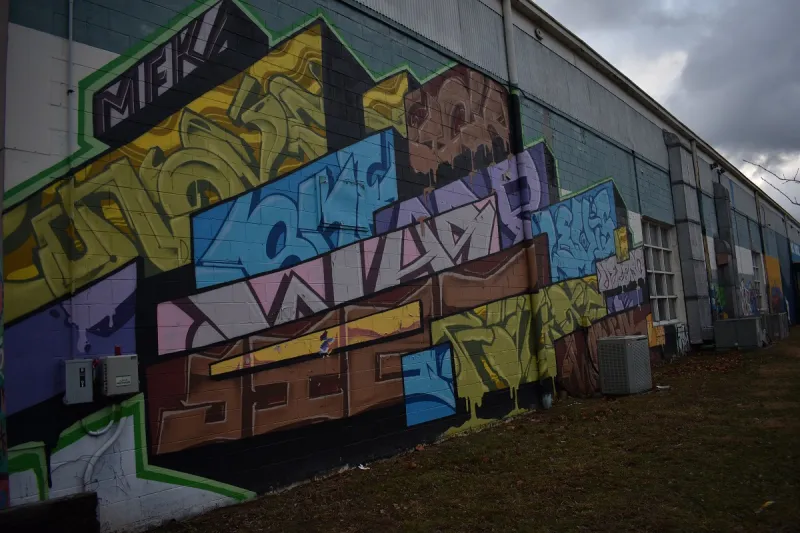
Photo by Photo by Eric Prouzet on Unsplash on Unsplash
The Screenshot Economy Has a Paper Trail
Here's a scenario that plays out weekly in 2025: a social media manager in Culver City needs b-roll for a skincare brand's TikTok. They grab a drone shot of a gorgeous, blooming mural off a wall in the Arts District. The video pops. Two million views, a spike in sales, everyone gets a raise.
Then the certified letter arrives.
The artist who painted that mural — who got zero permission requests, zero credit, and zero dollars — just hired a lawyer who specializes in copyright claims against brands. And here's the part that surprises people outside the art world: the artist is probably going to win.
"Street art sits in this weird legal zone people misunderstand constantly," says one New York-based IP attorney we spoke with, who asked not to be named because she's currently advising on three active cases. "Illegality of where the work was placed doesn't erase the copyright. Courts have said this repeatedly now. The writing on the wall is, quite literally, protected."
The Precedent Wall
The legal foundation was poured back in 2018, when a federal judge in Brooklyn ruled that fashion giant H&M couldn't use a mural by the artist @dillonourahio in a social campaign without a license. Then came the ~6.7 million dollar settlement between artist David Anasagasti and American Eagle over a viral mural backdrop in a marketing shoot. GM, Sony, McDonald's — all have faced claims over unauthorized use of street art in ads and social content.
The pattern since then has only accelerated. What's changed isn't the law. It's the velocity.
"Ten years ago, a brand would put a mural in a print ad and maybe 50,000 people saw it," the attorney explains. "Now the same footage gets cut into a TikTok, a Reel, a YouTube Short, a paid ad, and a landing page background. Every format is a new distribution. Every distribution strengthens the infringement claim. And the damages stack."
Graffiti writers, historically, almost never sued. The culture ran on anonymity — how do you claim ownership of work you could be arrested for? That era is over. Writers now operate openly, sign commissions, maintain LLCs, and register copyrights with the US Copyright Office like any other creative professional. Registration, notably, is what unlocks statutory damages — up to $150,000 per willful infringement.
The Filter Problem
If static ads were the first wave, AR filters are the second, and they're messier. We spoke with a brand-side creative director at a midsize agency in Chicago — she asked for anonymity because, in her words, "I have definitely shipped things I shouldn't have."
Her confession is common: internal review processes at most agencies simply don't have a checkbox for "is that wall art licensed?" Location scouting happens fast. Permits get pulled from the city, not from the artist. And when an AR filter overlays graphics onto a real-world location captured on camera, the question of who owns what gets genuinely thorny.
"The filter itself is original code and design — that's ours," she says. "But if the AR effect recreates a specific writer's throw-up that's visible in the camera background? Or worse, if the effect is a stylized version of their tag? That's where my stomach drops."
At least one known case has tested this exact territory: artists have gone after creators for AR lens effects that incorporated their letterforms and characters. The legal theory is the same as any mural case — reproduction and public display — but the medium makes it harder for juries to intuitively grasp. A filter is ephemeral, playful, seemingly harmless. Juries don't always feel the harm. Judges, following precedent, do.
What the Writers Say
Talk to writers who came up painting freight yards and they'll tell you the lawsuits represent something bigger than money. It's about authorship in a culture that historically denied they were authors at all.
One Los Angeles-based writer we interviewed, who now does licensed commercial murals under his real name, put it bluntly: "For decades, people said we weren't artists, we were vandals. Then they built billion-dollar brands off our aesthetic. Then they literally painted our work into their ads. The lawsuit isn't greed. It's the receipt."
But not everyone in the culture is cheering. Some old heads argue that litigation pulls graffiti into a corporate legal framework it was never meant to live in — that the whole point was impermanence, gift economy, the wall belonging to the neighborhood. A mural licensed to a skincare brand is, in some sense, a mural that died.
Where This Is Heading
The pragmatic future looks something like this:
- Licensing platforms. Several startups now exist specifically to broker street art licenses for brands, essentially stock-photo models for walls. Expect consolidation here.
- Rights clauses in scout contracts. Savvy agencies now require location scouts to document and clear any visible artwork, the same way they clear visible trademarks and logos.
- The AR gray zone gets tested. Somewhere in the next 18 months, a filter case will reach a meaningful ruling, and every agency in America will rewrite its creative guidelines overnight.
- Registration as standard practice. Writers who register their work before it goes up are building a portfolio of statutory-damage ammunition. The smart ones know it.
The advice from every attorney we spoke to collapses into one sentence: if the art is on the wall and you didn't license it, the fact that it's graffiti doesn't protect you — it protects the artist.
The wall was never free. Somebody paid for it in paint, risk, and years of practice. The law finally agrees. The For You Page is just the last place to get the memo.