City Hall's Favorite New Artists Are the Ones It Used to Arrest
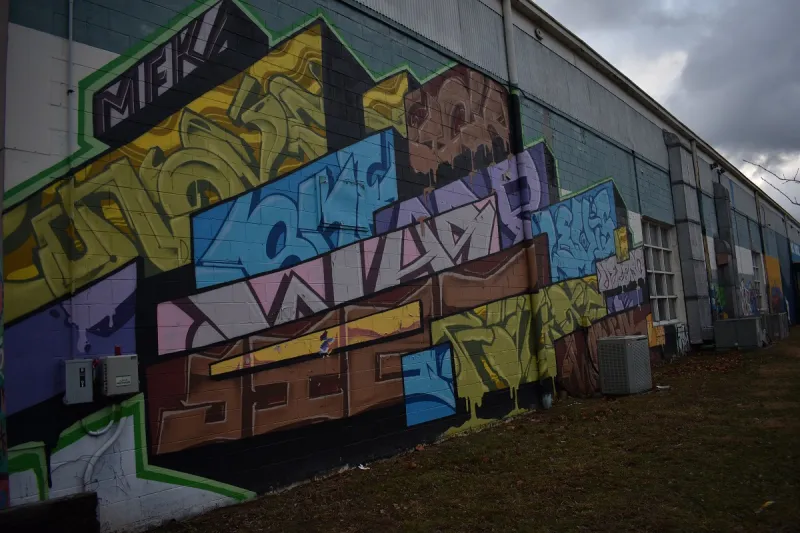
Photo: city sanctioned mural graffiti artist painting legal wall urban, via ankit2saxena.github.io
The story repeats in city after city now. A writer gets picked up for tagging a drainage canal or a viaduct piling. Years pass. Then the same municipal government that prosecuted them cuts a check — sometimes a few thousand dollars, sometimes a proper commission — to have that person paint a mural. Often on the very same wall. Frequently with a ribbon-cutting and a hashtag.
The official term is "creative placemaking." The writers have a different phrase for it, and it's not printable here.
Follow the Money, Because It's Not Coming From Where You Think
Here's what most press releases leave out: these programs rarely run on arts money alone. Peel back the budget and you'll find a blend of tourism board funds, economic development grants, sometimes even the same enforcement budgets that paid for the buff crews. One mid-sized American city we looked at funds its mural program partly through a blight remediation line item — meaning the money that used to buy gray paint to erase graffiti now buys paint to celebrate it.
That's not necessarily corruption. It might actually be the most efficient possible use of the budget. But it should tell you something about the logic: this is not primarily about artists. It's about surfaces. The city isn't commissioning the writer; it's commissioning the wall to stop being a problem.
The Case For — And It's a Real One
Let's be fair to the programs, because the good ones deserve it. There's genuine restorative potential in a system that says: you caused damage, here's a way to give something back with the same skill set. A few diversion programs around the country route young offenders into mural apprenticeships instead of fines and records, and the recidivism numbers, where they're tracked, look promising.
There's also a knowledge-transfer argument that gets overlooked. Writers know surfaces, weathering, which paints hold on raw concrete, which spots get traffic. A sanctioned mural program staffed by actual writers produces better work and, arguably, safer work — no one falling off a highway overpass at 3 a.m. if the overpass has a permit attached.
And let's not pretend the underground was a sustainable retirement plan. Some of these writers are in their forties. Knees go. Court dates don't stop. A commission isn't selling out; sometimes it's just eating.
The Case Against — Also Real
But here's where the skepticism earns its keep. When a city turns graffiti into a tourism asset, it doesn't just absorb the culture — it curates it. The proposals that get approved are the ones with community input sessions and liability insurance. The ones that get approved are, not coincidentally, the ones that look good in a downtown revitalization deck.
What gets lost in that filter is the entire reason the form existed. Graffiti was a conversation happening without permission — about territory, about visibility, about who gets to mark a city that otherwise only marks you. A mural committee with a six-week approval process cannot, by definition, host that conversation. It can only exhibit its fossil.
Worse, some programs use sanctioned murals as cover for enforcement elsewhere: paint this beautiful wall here, and we'll buff twice as hard over there. The aesthetic gets absorbed; the politics get arrested.
Can the Underground Survive Its Own Museum?
The writers I trust on this question tend to give a version of the same answer: the underground doesn't die, it relocates. Every wall that gets sanctioned raises the value of the ones that haven't. The moment a city puts graffiti on a map, someone's already painting the place the map doesn't reach.
So maybe the honest read is this: the commissions are fine, even good, for the individual writers taking them. But let's not confuse a municipal mural program with a truce. City Hall didn't fall in love with the culture. It fell in love with the photos. And the writers who take the checks would do well to remember which one of those they can live without.