Before the First Can Pops: The Muralists Making Music for Walls That Don't Exist Yet

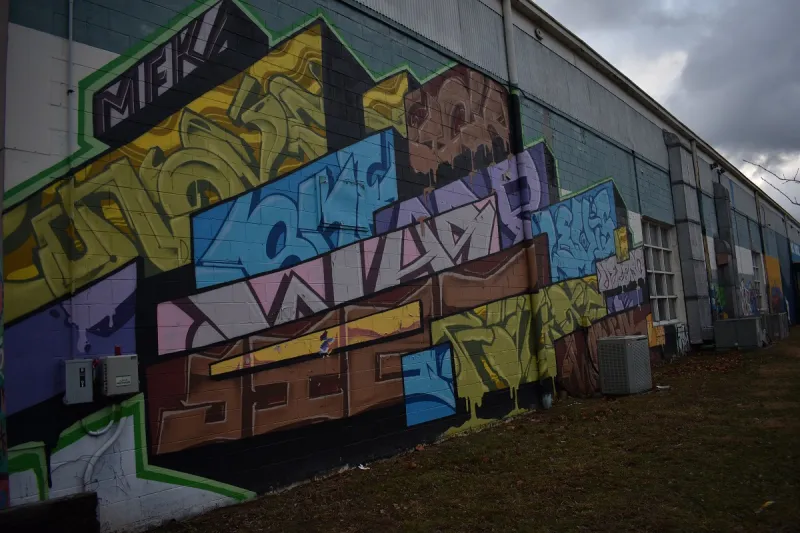
Photo by Photo by Les Taylor on Unsplash on Unsplash
The beat comes first. Not the sketch, not the color study, not the ladder rental. The beat.
That's how Marisol Vega works now, anyway. The Queens-based muralist spent a decade painting faces on brick across the outer boroughs—hardworking pieces, well-liked, forgettable in the way most good street work is. Then last spring, a producer friend named Dario handed her a pair of headphones on a rooftop in Astoria and played her eleven minutes of audio he'd recorded walking her old block: the 7 train shrieking overhead, a bodega door chime, an argument in two languages, kids on a stoop running a card game.
"I heard my neighborhood before I saw it," she says. "I'd been painting it for ten years and never once thought about what it sounded like."
Six months later, Vega's mural on the side of a laundromat on Roosevelt Avenue carries that recording inside it. A small NFC sticker buried under a clear coat near the bottom right corner, at stroller height. Tap your phone to the wall and the block plays back to you while you look at it.
The Session Before the Wall
Vega let us trail her through the full process, and the studio day looked nothing like a painting day. It looked like a recording session.
She and Dario sat in a basement in Bushwick with a condenser mic and a laptop, building what they call the "score" for a wall she hadn't been commissioned to paint yet—a speculative soundtrack for a speculative piece. The logic, she explains, is that sound shapes composition. A wall scored with a slow, sparse loop of cicadas and distant traffic pulls toward open negative space and cooler tones. A wall scored with a chopped-up merengue sample wants density, heat, saturated color.
"I used to sketch to whatever playlist was on. Now the audio is the brief," she says. "The wall answers the sound."
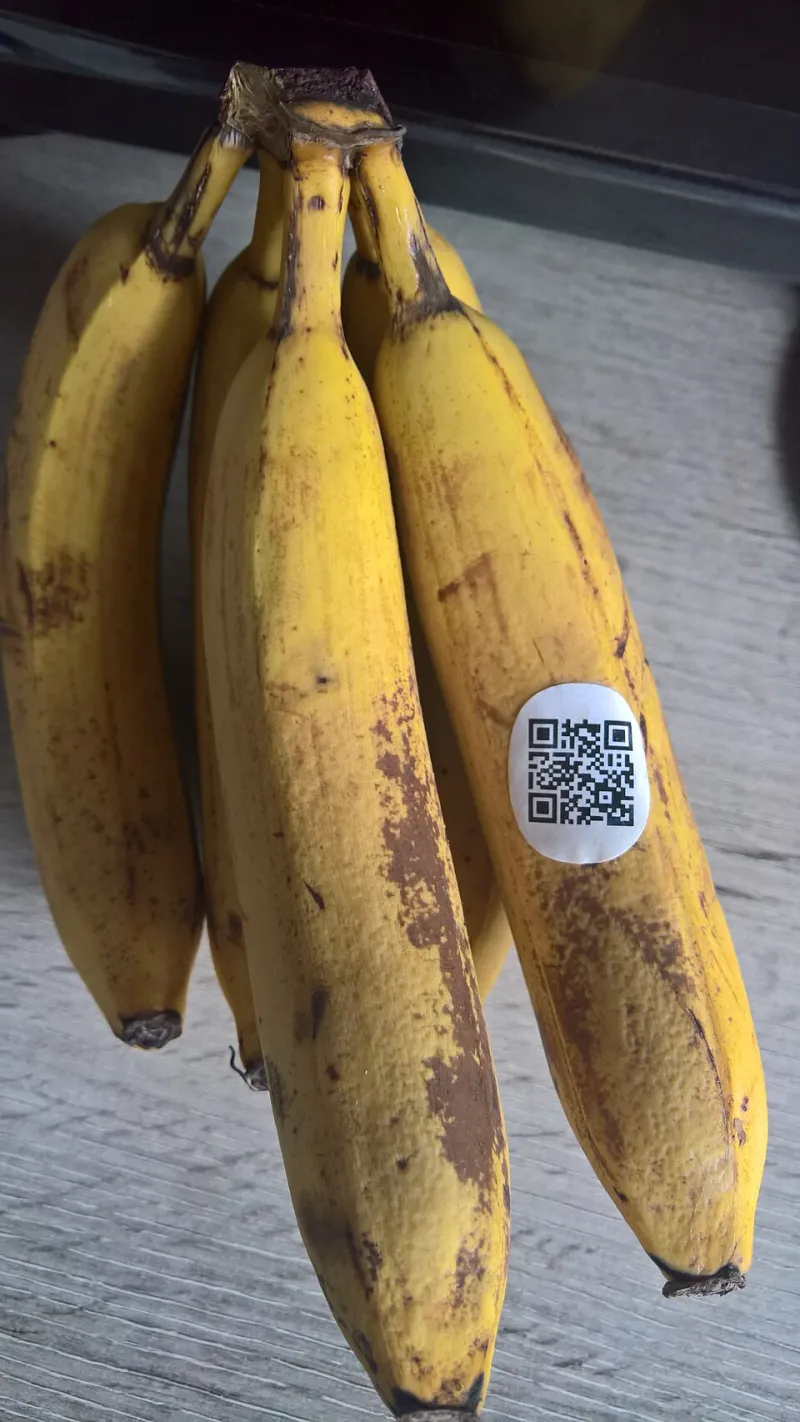
This isn't a one-off. There's a loose network of muralists—in Philadelphia, Detroit, Phoenix, LA—quietly doing the same thing. Some embed QR codes linking to Spotify playlists built for the piece. Some use NFC tags like Vega. A painter in Detroit we spoke with, who asked to go by just Ren, records what he calls "wall audio"—he presses his phone against the brick before priming it and captures the hum of the building itself, HVAC, wiring, whatever the structure gives off, then loops it under a beat and links the result to the finished mural.
"The building's already making a sound," Ren says. "Nobody's listening. I just turn the gain up."
Does Anyone Actually Tap?
Here's the honest answer, based on Vega's numbers: some people, not most people.
Her laundromat mural has been up since October. The NFC tag platform she uses logs around 40 to 60 taps a month—decent for a physical trigger in a city where everyone's headphones are already full, nowhere near the thousands of eyeballs that pass it daily. But the taps that do happen go long. Average listen time is over four minutes, which, for a wall, is an eternity. People stand there. People wait for the drop. One woman told Vega she now taps the wall every morning on her way to work, "like checking on a friend."
That's the part that keeps coming up in conversations with these artists. The audio doesn't necessarily pull in more people. It holds the people who arrive.
There's precedent worth noting here. Musicians have been hiding content in physical objects for years—vinyl test pressings with locked grooves, zines with flexidiscs glued to the back cover. The street art version just swaps the object for architecture. And cities with strong public art infrastructure, like Philadelphia's Mural Arts program, have already experimented with audio components on walking tours. What's different now is that individual artists are building the sound layer themselves, cheaply, without institutional permission, using a $3 sticker and a free hosting link.
Gimmick Question, Asked Sincerely
So: evolution or gimmick?
The skeptical read is obvious and fair. QR codes on street art are already a well-worn move, and most of them dead-link within a year. A wall whose entire second layer lives on someone's SoundCloud is a wall with an expiration date. Paint lasts decades; a hosting plan lasts until someone forgets to renew it. Vega admits she's hedging—the audio isn't the piece, it's an appendix to the piece. Scrape the sticker off and you still have a mural.
The more interesting argument comes from the artists themselves, who mostly refuse the either/or. Ren puts it bluntly: "Every wall already has a soundtrack. The block has a sound. I'm not adding a gimmick, I'm notarizing something that's already there."
Vega goes further. She thinks scoring walls might change what gets painted in the first place—if you're composing for ears as well as eyes, you start thinking about rhythm in your linework, about what a viewer's eye does at 90 beats per minute versus 140. "Public art has always been a duet with the street," she says. "We just finally gave the street a mic."
Whether any of this outlives the current NFC-and-QR moment is genuinely unknowable. The tech will change; the impulse probably won't. Artists have always wanted their work to do more than sit still on a surface. Right now, on a laundromat in Queens, some of it hums.