Squatting the Slow Roll: A Paint-to-Capture Diary for a Camera That Always Arrives Late
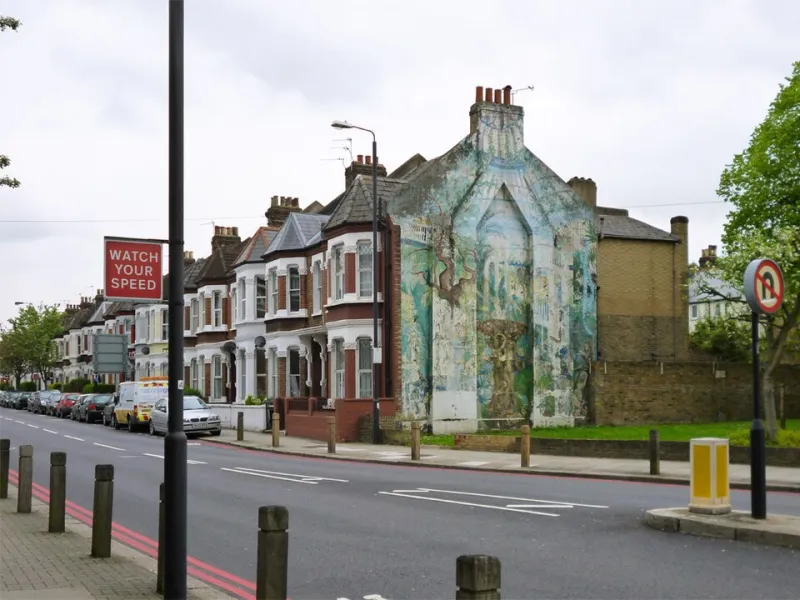
Photo: Robin Webster , CC BY-SA 2.0, via Wikimedia Commons
The wall is already gray when I finally see it in person. A long brick flank on the east side of a mid-size Midwestern city, just off a bus route and behind a former appliance store. In April 2026, a crew called Slow Roll Society covered it with a 40-foot mural: hard-edged shapes, a washed-out sun, a figure that looked like it was buffering. By November, the paint has mostly flaked into the weeds. The appliance store is still empty. The wall looks like it never happened.
But pull up Street View on your phone and there it is—saturated, intact, frozen at a date stamp that is already nine months old. That's the point. The crew didn't paint for the block. They painted for the camera car that rolled through months later, and for the version of the wall that would live in the feed long after the physical paint gave up.
Scouting the Slow Roll
The crew doesn't wait for the mapping car. They read the city for clues. Fresh pavement. Utility flags. The way past camera passes line up on a map like a slow heartbeat. Mara, one of the crew's organizers, calls it "squatting the slow roll." You find a wall on a route that hasn't been photographed in two or three years, you paint it when the weather will hold, and you let the archive do the rest.
"You're not chasing the camera," Mara says. "You're chasing the city the camera will see. There's a difference." The difference is timing. A wall painted in April might get captured in June and published in August. By the time anyone taps it on their phone, the real wall is already sun-bleached. The image is a rumor with a date stamp.
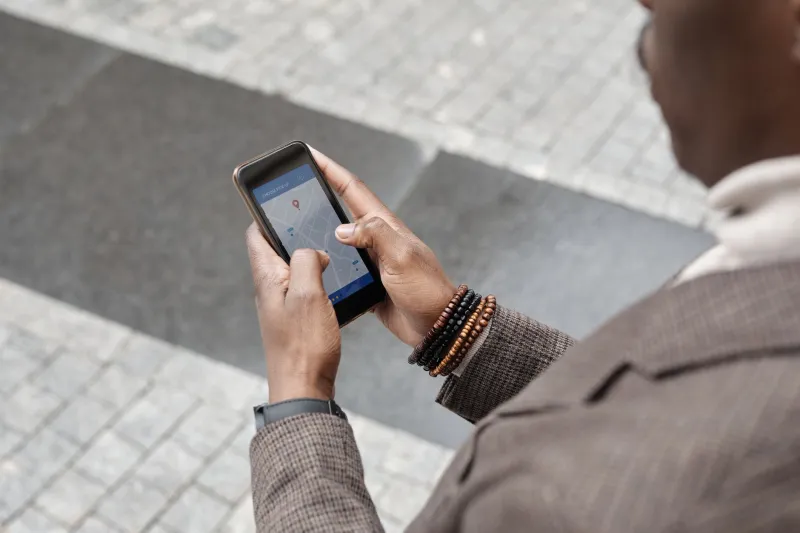
They scout with screenshots. Past Street View frames, saved and compared. They look for roads that got repaved, corners where the imagery is old enough to feel like a gap. They avoid tourist corridors. They want walls that are visible but not precious. "If the block already has a mural, you're just adding noise," says Dex, who handles the crew's documentation. "We want the blank spot the camera forgot."
Painting for a Timestamp
The palette is deliberately unstable. Exterior latex cut with water. Wheatpaste. Chalk. Untreated plywood when they can get it. The crew wants the work to look good for exactly one capture—and then to fail in public. Not because they hate the wall. Because they want the durable version to be the one that travels. The phone feed doesn't care about peeling paint. It cares about contrast.
So they design for the lens. High-contrast shapes. Big blocks of color. No fine detail that will turn to mush in a wide-angle frame. "The camera compresses everything," Dex says. "You paint for the thumbnail. You paint for the person scrolling past at 60 miles an hour on a screen." They test the design by taking their own phone photos from the street, squinting at the result, then repainting the parts that disappear.
After the paint goes up, they file what they call a capture packet: dates, GPS, wide shots, close-ups, weather notes. It's not a portfolio. It's a receipt. If the mapping car comes through in June, they want to know what the wall looked like in April. If the image goes live in September, they want to know what the wall looked like before the archive rewrote it.
The Phone Is the Real Wall
Locals see a fading thing. The phone sees the good version. That split is the whole project. People find the mural through a geotag, a screenshot, a repost on a story. They don't touch the brick. They tap a pin. The crew checks Street View the way other people check weather—obsessively, with a low hum of dread.
When new imagery drops, someone screenshots it and sends it to the group chat. "It's like watching your own ghost get younger," Mara says. The archived mural is brighter than the real one. The archived mural has no weeds. The archived mural is a nine-month-old photograph pretending to be the present.
And that's what makes it mobile media. The wall is site-specific. The image is not. It gets cropped, filtered, stitched into carousels. It becomes a backdrop for someone's post about a road trip. The crew doesn't control that. They just paint the seed.
The Ethics of Letting It Die
Not every wall is permitted. Some are handshake deals with property owners. Some are not. The crew says painting for the archive is a way to avoid the permanence trap—the expectation that a mural has to be maintained, protected, lit, and explained. "We're not decorating the block," Mara says. "We're decorating a database." That line sounds colder out loud than it does in the group chat.
A city public-art coordinator I spoke with has mixed feelings. She likes the attention the images bring. She doesn't like the gray aftermath. "A neighbor has to look at that wall every day," she says. "A date stamp doesn't mow the weeds." The crew has started leaving small maintenance notes with property owners—what will fade, when, and what a clean removal looks like. It's not a solution. It's a courtesy.
The Gray Return
By November, the wall is mostly back to primer and brick. The figure that looked like it was buffering has buffered out. The sun is a stain. The camera car may come again next year and overwrite the old image with a fresher one, or it may not. That's the fragile part. The durable version isn't durable either. Street View updates. Old frames get retired. The archive can forget.
So the crew has started archiving their own screenshots, saving the frames before they disappear. It's a small hedge against the slow roll. "We're squatting a memory," Dex says. "That's all." The wall returns to gray. The feed keeps the color. And somewhere in a server farm, a nine-month-old photograph keeps pretending it's still April.