Dropped Pins, Not Tags: Inside the Coordinate Crews Bombing the Map
The spot doesn't exist. That's the first thing you have to accept. There's no wall, no overpass, no drainage canal with a smooth concrete lip. There's a pin on a map — 40.7142, -74.0064, give or take — and inside that pin, invisible to everyone walking past the actual corner in lower Manhattan, is a piece. A full production. Burners, throwies, a background. All of it rendered in pixels, anchored to a patch of air above a parking garage.
Welcome to coordinate bombing, where the city's most active writers have stopped fighting for walls and started fighting for empty space.
The Spot That Isn't There
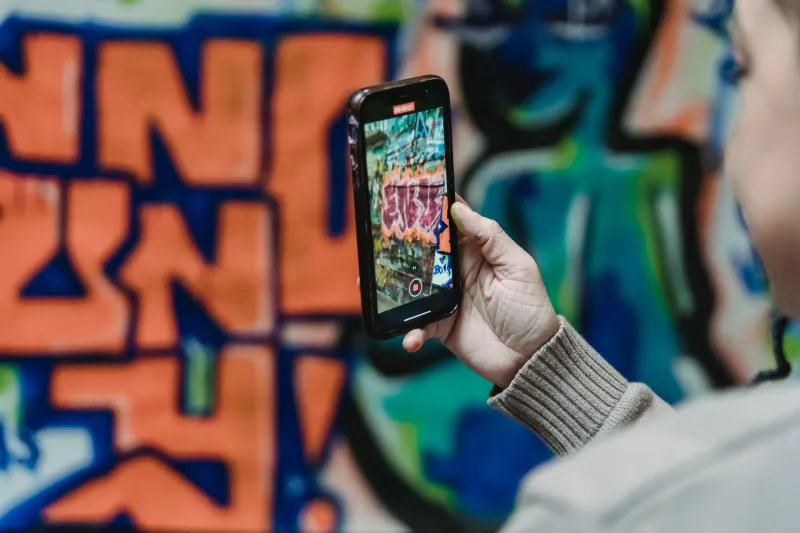
The mechanics are simple in a way that feels almost insulting. Using geocaching-style platforms and map-based art apps, a writer drops a digital work at an exact latitude-longitude point. Anyone with the right app — and the patience to walk there — can open the pin and see it. Some platforms layer the work over the real world through your phone's camera. Others keep it strictly two-dimensional, a thumbnail floating in a sea of streets.
What matters is the claim. Once a coordinate is taken, it's taken. And like every spot in this culture's history, the good ones go fast.
"The first week, it was a free-for-all," says a writer who goes by Lumen, based in Chicago, who asked to be identified by tag only. "Then people realized the spots with foot traffic — Millennium Park, the Riverwalk, whatever — were getting sniped. Now there are dudes camping coordinates like it's a drop."
Why a Pin Hits Like a Wall
The bragging rights question is the one that matters, and everyone we talked to had a version of the same answer: the risk moved, it didn't disappear.
Painting a legal wall proves you can paint. Painting an illegal one proves nerve. Dropping a piece at a coordinate that a hundred other writers had their eye on — and getting there first, at 2 a.m., standing in the rain holding your phone up at the exact point — proves something else. Dedication, maybe. Or just a different kind of stubborn.
There's also the permanence problem, inverted. A wall gets buffed. A coordinate, on most platforms, is functionally forever. Lumen keeps a folder of pieces from five years ago, still sitting at their original points, untouched by any city cleanup crew. "Some of them are on buildings that got demolished," he says. "The wall's gone. The tag's still there. That's the flex."
The Real-World Anchor
What keeps coordinate bombing from becoming purely digital — just another feed — is the anchor. Every piece is tied to a physical location, and the location is chosen with the same care as a wall. Sightlines matter. History matters. One writer in Philadelphia told us he only drops at coordinates tied to demolished landmarks: the site of the old Gallery at Market East, a long-gone dive bar in Fishtown, the footprint of a rowhouse his grandmother rented in the '70s.
"You're painting a memory of a spot," he said. "People walk through the parking lot that used to be the Gallery and they don't know. But if you know, you know."
That's the phrase that kept coming up. If you know, you know. The scene has accidentally rebuilt the gatekeeping that made street culture street culture in the first place — except now the gate is a coordinate and a login.
Field Guide: Finding Your First Pin
If this sounds like your kind of treasure hunt, here's the practical part. Getting started costs nothing but shoe leather.
1. Pick your platform. Geocaching.com is the grandfather — millions of logged coordinates, though most are traditional caches rather than art. For street-art-specific drops, look at map-based creative platforms and AR layering apps; the scene shifts fast, so ask around rather than trusting app store reviews.
2. Start with high-density zones. Big cities have more pins, obviously, but so do specific neighborhoods. In most US cities, check around transit hubs, college campuses, and waterfront paths. Writers pick spots people actually pass through.
3. Read the logs. Every visited coordinate usually has a visitor log or comment thread. This is where the scene's social life happens — shoutouts, rivalries, calls for the next meetup. Lurk before you post.
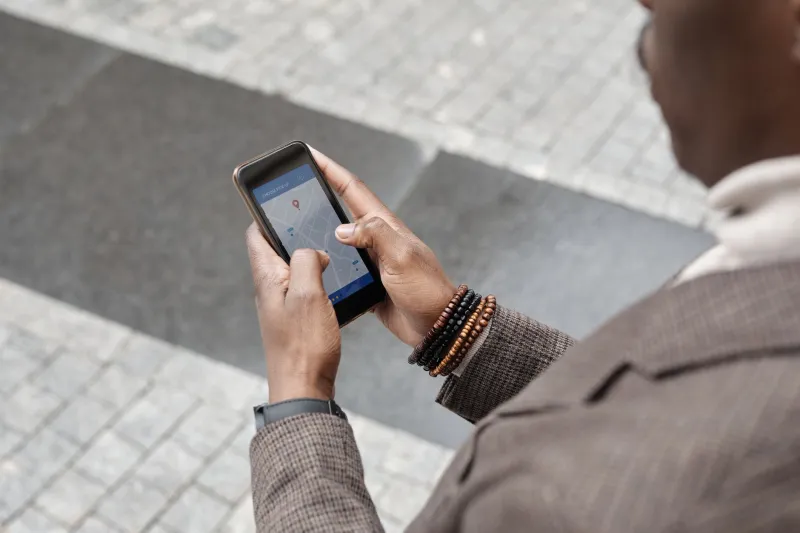
4. Bring a battery pack. GPS hunting drains phones fast, and walking a city with your screen at full brightness is a battery massacre. Ask us how we know.
5. Mind the real world. You'll be standing in public places staring at your phone. Watch traffic, watch your surroundings, and don't trespass to reach a coordinate — the whole point is that the spot is legal to visit.
The Map Is the New Wall
It's tempting to file this under digital art and move on, but that misses the point. Coordinate bombing isn't street art's replacement — it's its translation. The same instincts drive it: mark a spot, claim a territory, make the people who know, know. The medium changed. The ego didn't.
And maybe that's the healthiest sign of all. Every time the city has tried to end this culture — buffing, bans, face-recognition cameras — it's mutated instead. The wall became the train became the sticker became the pin. The next time you walk past an unremarkable corner and someone's standing there grinning at their phone, maybe check a map.
There might be a whole gallery hanging in the air above your head.