One Day Only: The Crew Turning a Dead Ohio Mall Into an AR Time Capsule
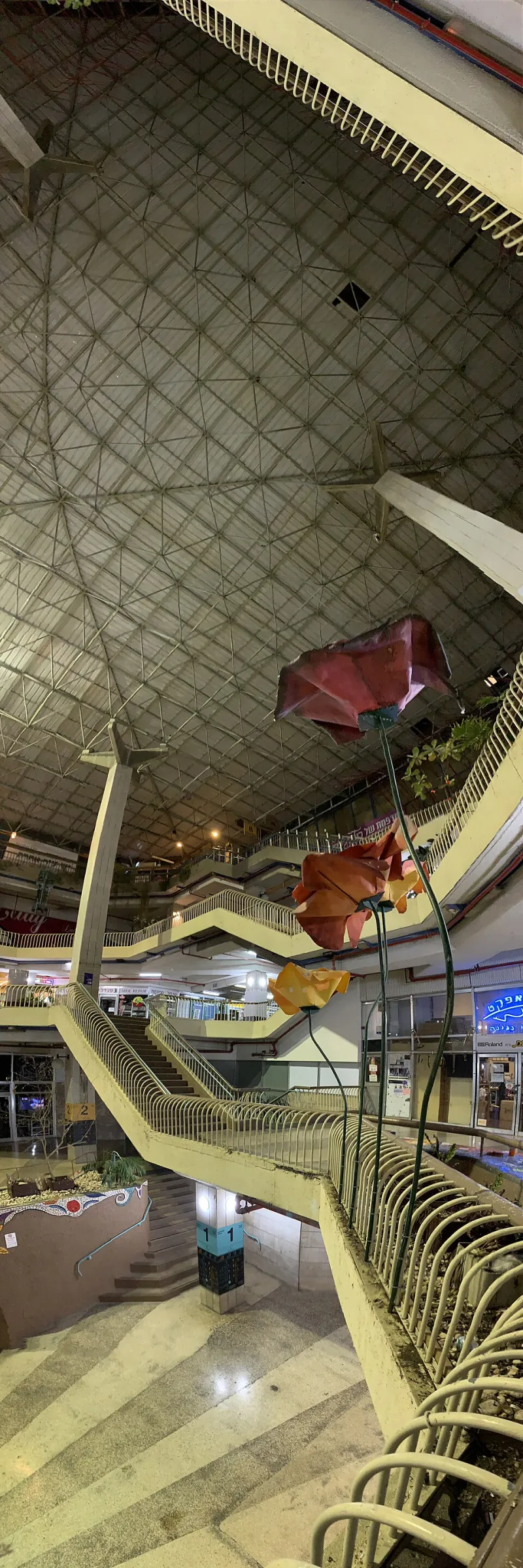
Photo: Yitzilitt, CC BY-SA 4.0, via Wikimedia Commons
The escalators at Forest Grove Mall haven't moved since 2019. The fountain is drained. Half the skylights are boarded. But if you stand in the center court at the right angle, phone out, you'll see something the leasing brochures never promised: a 40-foot jellyfish of light drifting up through the atrium, tentacles trailing over the shuttered food court.
It exists for one day. Then it's gone.
The Pop-Up That Isn't Really There
Forest Grove is the latest stop for a loose collective calling themselves Soft Launch, a crew of five who've spent the past two years staging what they call "24-hour galleries" in vacant commercial spaces across the Midwest — a dead big-box in Toledo, a half-emptied strip in Gary, a former Sears anchor here in Ohio. The format is simple and slightly deranged: get permission (or at least tolerance) from whoever holds the keys, spend one frantic night anchoring AR markers to physical points in the building, open the doors at noon, and pull everything down by the following noon.
"It's street art logic with a different toolkit," says Mara Voss, the crew's de facto coordinator, who used to wheatpaste under a different name. "Same rules. You're not asking the building to love you forever. You're making something for people who show up."
The difference is what "showing up" means. Only two of the works at Forest Grove involve any physical intervention — a vinyl floor decal here, a projection rig there. Everything else lives in the phone. Visitors download the crew's viewer app, walk the mall's spine, and watch empty storefronts refill with impossible inventory: a beauty salon selling bottled weather, a shoe store where every box opens into a different city's skyline.
Anchoring Art to a Dead Atrium
The night before the opening is where the real labor happens. AR doesn't tolerate ambiguity — every digital object has to be pinned to a physical reference point, or it drifts, flickers, or flat-out disappears when a visitor's phone angle changes.
The crew works in headlamps, taping printed QR-style markers inside doorframes, on column bases, along the terrazzo seams. Each marker is a coordinate. The jellyfish in the atrium took three recalibrations because the skylight's ambient light confused the tracking.
"People think AR art is just, like, a filter," says Deon Park, the crew's technical lead, crouched over a laptop on a discarded display table. "It's more like rigging. You're hanging weight on a building that can't hold it. The building just doesn't know it yet."
By 4 a.m., the map is live: fourteen anchors, eleven works, one full loop from the old anchor store to the food court and back.
Who Shows Up to a Gallery That Vanishes?
About 300 people came through over the 24 hours — a mix of local teens who heard about it on TikTok, a bus of art students from Columbus, and a handful of older residents who remembered when the mall's fountain had water in it. The demographic split is the point. Voss calls it "the only kind of mixed-use development left."
The emotional pull is heavier than anyone expected. Multiple visitors described the experience as seeing ghosts — digital works filling spaces their memories still occupied. One woman stood in front of a former clothing store for several minutes, watching a generated rainstorm fall inside it, and said it looked like the store was "crying from the inside." She wasn't being dramatic. That's just what it looked like.
Can a Dead Mall Have a Second Life as a Canvas?
Here's the uncomfortable question hovering over all of this: is a one-day AR gallery actually anything more than a very beautiful eulogy? The mall is still dying. The digital jellyfish doesn't pay rent. And once the crew leaves, the building reverts to its default state — a monument to 1980s retail optimism with a leaking roof.
The crew's answer is deliberately sideways. They're not trying to save Forest Grove. They're trying to prove a model: that the roughly 300+ dead or dying enclosed malls scattered across the US are an enormous, underpriced cultural resource — huge, weatherproof, structurally fascinating spaces sitting empty in every metro area. Landlords, increasingly desperate for any activity that generates press or foot traffic, have started calling them. Two more 24-hour shows are booked for spring.
Whether that's a movement or a novelty depends on the next question: can anyone build a sustainable practice out of art that deletes itself on a timer? The crew is cagey about funding — a mix of small arts grants, a university residency, and what Park calls "day jobs we don't discuss."
But standing in the atrium as the 24-hour clock ran out, watching the jellyfish dissolve on schedule, the eulogy framing started to feel wrong. Nothing about the mall was being memorialized. It was being used — loudly, briefly, by people who had no intention of buying anything.
For a building that spent forty years as a machine for selling, that might be the most subversive thing that's ever happened in it.