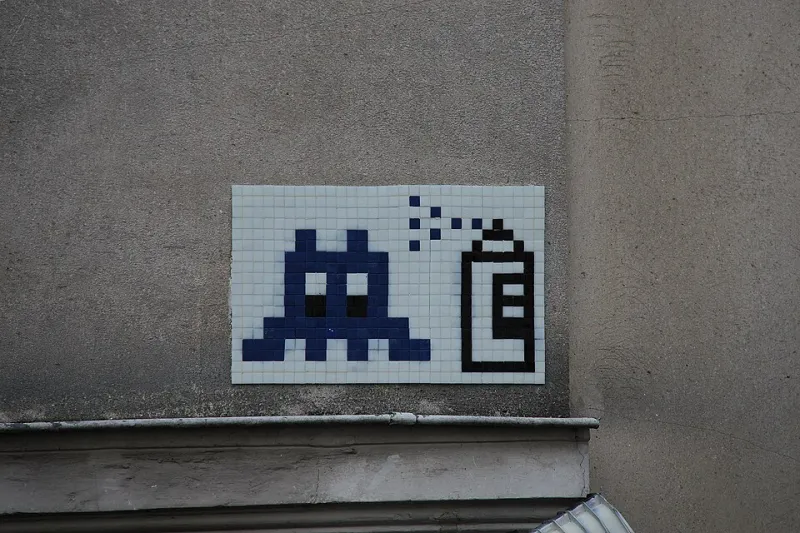
From Freight Cars to Font Menus: The Writers Cashing In on Their Own Handstyles

Photo by Photo by Marija Zaric on Unsplash on Unsplash
There's a moment happening right now that would've sounded absurd to anyone painting yards in the nineties: a graffiti writer sitting in a Zoom call with a type foundry, negotiating licensing fees for the letterforms they burned into muscle memory two decades ago.
It's real, it's growing, and it's messy as hell.
The Handstyle Economy Is Here
Open up a recent sneaker release — say, a basketball shoe drop in a major US market — and there's a decent chance the script across the side of the box came from someone who learned their craft on a freight car in the middle of the night. Video games have been the hungriest buyers: open-world titles set in New York or Los Angeles want authentic tags on their walls, and the fastest way to get them is to license the real thing from writers who've been doing it since before the studio's art directors were born.
Type foundries got in next. Handstyle-to-font pipelines now exist where a writer's throw-ups get digitized, kerned, and sold as a display typeface. Some of these deals are legit — the writer gets a cut, sometimes a flat fee, sometimes a per-license royalty. Others are, to put it charitably, more complicated.
Can You Even Copyright a Tag?
Here's where it gets legally spicy. Copyright law protects original works of authorship, and courts have generally agreed that graffiti — even unsanctioned graffiti — can qualify. The famous precedent is the lawsuit over the Brooklyn warehouse wall where a real estate developer painted over dozens of protected murals and lost a multi-million dollar judgment under VARA, the Visual Artists Rights Act.
But a handstyle is different from a mural. A tag is a signature. It's a name. And names, standing alone, generally can't be copyrighted. What can be protected is the specific artistic expression — the flourishes, the letter construction, the flow. So the question becomes: where does the name end and the art begin?
Lawyers who work in this space describe it as one of the grayest zones in intellectual property. One writer we spoke to — let's call him a twenty-year veteran of the Midwest freight lines — put it bluntly: "My name is my name. But the way I bend an R? That took me ten thousand reps. Somebody's gotta own that, and I'd prefer it's me."
The Bootleg Problem
The darker side of this economy is the licensing that never happened. Type designers have been accused of tracing well-known writers' hands and shipping the results as commercial fonts. Streetwear brands have lifted tags for graphics without so much as a handshake. And because many graffiti writers operate under aliases and avoid paper trails, pursuing a claim can mean outing your legal identity to a court docket — a nonstarter for people whose work still exists in legal jeopardy.
Some writers have responded by going legitimate on purpose: forming LLCs, registering copyrights on digitized alphabets, hiring entertainment lawyers. The transformation from elusiveness to paperwork is jarring, and not everyone in the scene thinks it's a good look. There's a lingering belief, especially among older heads, that the moment your handstyle has a EULA, something essential about it dies.
Signing the Contract Without Signing Away the Culture
The writers who've navigated this successfully tend to share a few habits. They retain ownership of the underlying artwork and license usage rather than selling it outright. They read the exclusivity clauses — one game studio reportedly asked a writer for a perpetual worldwide license to his entire alphabet for less than what the studio spent on lunch that day. He walked.
Others have taken the opposite route: full buyouts, cash up front, no regrets. "I painted for free for twenty years," one told us. "If a shoe company wants to pay me what a gallery would, that's not selling out. That's getting paid."
Both camps, though, are watching the same fault line. The handstyle was always valuable because it was everywhere and owned by no one — a currency of presence, not property. Turning it into an asset class changes what it means. The letters are the same. The context isn't.
Whether that's evolution or extraction probably depends on which side of the spray can you're standing.