Slap, Scan, Repeat: Chasing America's QR Sticker Underground Across Three Cities
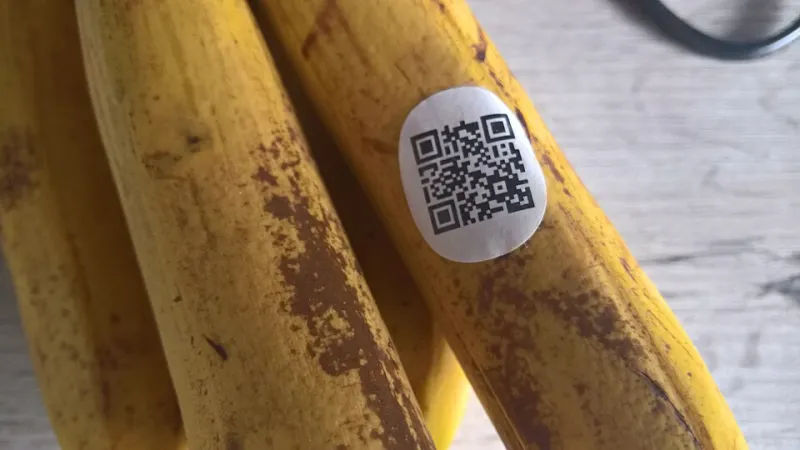
Photo: Donald Trung Quoc Don (Chữ Hán: 徵國單) - Wikimedia Commons - © CC BY-SA 4.0 International.(Want to use this image?)Original publication 📤: --Donald Trung 『徵國單』 (No Fake News 💬) (WikiProject Numismatics 💴) (Articles 📚) 20:36, 19 April 2021 (UTC), CC B
The sticker is about the size of a pack of gum. Matte black, one color, a QR code dead center. It's been slapped onto a parking meter in Wicker Park sometime between 2 and 4 a.m., and by sunrise it's been scanned forty-one times.
That's the whole game. That's the entire medium.
The Cheapest Canvas in the Game
Every graffiti writer knows the hierarchy: burners at the top, throwies in the middle, and stickers way down at the bottom — the format for people without a ladder or a nerve. Slaps cost pennies. You print a sheet of a hundred for the price of two cans of paint, and you can post up a whole block in the time it takes a copy to walk past.
But sticker culture has quietly become the most experimental corner of street art, and the QR code is the reason. When your tag is scannable, the sticker stops being an image and starts being an interface. It's a door in the wall of the city — or a door on a lamppost, a crosswalk signal box, the back of a bus stop bench.
"Paint says look at me," the artist we'll call Meter Man tells us over cheap coffee in Austin. "A sticker with a code says touch me. That's a different relationship with the street."
Three Cities, One Roll of Stickers
Meter Man runs what he calls a "drop circuit" — a rotating route through Chicago, Austin, and Philadelphia, refreshed every few months. Each city gets a different payload.
Chicago gets the music. His stickers there link to unreleased tracks from a collective of local producers, a new song every two weeks. Scan the meter, hear the beat. It's a treasure hunt with no prize except being first. He claims one drop got scanned over 3,000 times in a weekend after a TikTok clip of someone finding it blew up.
Austin gets the brand ambush. Here's where it gets spicier: during SXSW, Meter Man printed stickers that mimicked the visual language of an actual festival sponsor — same fonts, same color palette — but the code led to a satirical landing page. Legal gray zone doesn't begin to cover it. "Nobody got sued," he shrugs. "They sent a cease and desist to a P.O. box that doesn't exist."
Philadelphia gets the diary. Plain black stickers, no branding, each linking to a single photo — a timestamped snapshot of wherever he was standing when he printed the batch. It's the closest thing street art has to a burn book written in URLs.
The Shelf Life Problem
Here's the thing nobody tells you about sticker graffiti: it's a war against weather and city workers. A slap on a parking meter might live three days or eight months, depending on rain, sun, and whether the meter maid's union is in a scraping mood.
Meter Man tracks it obsessively. Average lifespan in Philly: about five weeks. Chicago, with its salt trucks and freeze-thaw cycles: closer to three. Austin stickers essentially never die — the sun bleaches them but the adhesive outlives everything.
The QR codes complicate it further. A torn sticker is a dead tag; a scratched code is a broken link. So he laminates the high-traffic ones and re-runs routes on a schedule, treating the city like a content calendar with weather damage.
Is It Even Vandalism? A Lawyer Shrugs
The legal picture is murkier than a subway window. Stickers generally fall under ordinances covering the posting of advertising or defacement of property, and enforcement is wildly inconsistent. Cities that aggressively buff graffiti often ignore slaps entirely because removal costs more than the sticker ever could.
"It's a volume crime," one municipal art coordinator told us, requesting anonymity because her city has no official sticker policy. "We cite what we can prove. A QR sticker with no name on it? Good luck."
That anonymity is the point. Unlike a handstyle, a sticker is deniable at scale. Anyone could have printed it. The code is the signature and the alibi at once.
Small Tags, Big Reach
What sticks with you after riding along — pun fully intended — is the asymmetry. A mural might get seen by 500 pedestrians a day and photographed by a few dozen. A two-inch QR sticker on a crosswalk button gets scanned by strangers who then push the link into group chats, where it travels farther than any wall in the city could take it.
Meter Man's total output over four years: maybe 8,000 stickers, most long gone. Total scans across all drops: he thinks somewhere north of 90,000. No muralist in America has that kind of engagement-to-material-cost ratio.
The smallest tag in street art might also be its most contagious. The city just hasn't figured out how to buff a hyperlink yet.
Meter Man's locations, codes, and drops are — obviously — not being published here. Some links you have to find yourself.