Wrecking Ball RSVP: The Writers Sneaking One Last Piece Into Buildings Already Dead
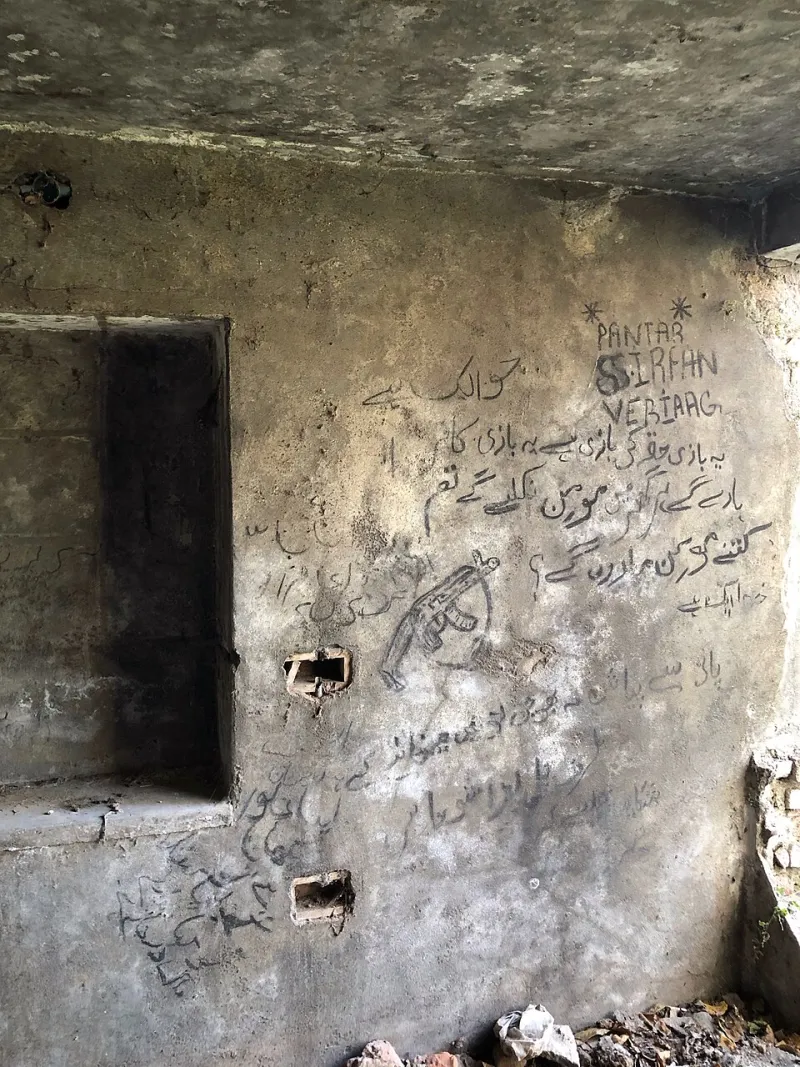
Photo: UnpetitproleX, CC BY-SA 4.0, via Wikimedia Commons
There's a specific kind of silence inside a building that's been condemned. The HVAC is off. The elevators are locked out. Water drips somewhere it shouldn't, and every footstep sounds like an announcement. But in a third-floor stairwell of a shuttered hospital in Buffalo, someone has just finished a piece. Fresh paint, maybe two days old, in a building that officially has no visitors.
This is the paradox at the heart of demolition graffiti: the writing gets better as the building gets deader.
The Last Supper Effect
Talk to enough people in this scene and a pattern emerges. A building gets red-tagged, fences go up, the permits come down — and suddenly the walls open up. Security thins out. Nobody's fixing the cameras. For a window that can last anywhere from three weeks to two years, a condemned building becomes the most permissive canvas in America.
"It's the opposite of how the game usually works," says Dee, a writer in Cleveland who asked to be identified by her tag only. "Normally you're racing the buff, the cops, the property manager. In a dead building, you're racing the wrecking ball. And the wrecking ball always wins. So the pressure flips. It's not about getting up — it's about getting it right."
Some writers call it the last supper effect. A structure that spent decades accumulating throw-ups, handstyles, and half-faded pieces becomes, in its final months, a kind of cumulative retrospective. Layer over layer, twenty or thirty years of a city's underground art history, all in one walkthrough. Then it's gone by Friday.
The Informal Tour Guides
Which brings us to the tours. Not official ones — nothing about this is official. But in cities like Detroit, St. Louis, Philadelphia, and Gary, Indiana, a loose network of photographers, urban explorers, and older writers has started walking small groups through buildings slated for the wrecking ball.
The format is loose. Four to eight people, usually. Someone who knows the building — where the floor is soft, which stairwells are sketchy, where the good walls are — leads the way. Phones come out, but the point isn't content. It's documentation. Everyone shoots the walls before the walls stop existing.
"I've walked people through a former DMV, a closed high school, a whole floor of an old department store," says Marcus, an archivist who runs a photo database of Midwest graffiti and agreed to talk on background. "And the thing people always say is the same: 'I had no idea this was down here.' These buildings are full of work nobody ever photographed. Pre-internet pieces. Crews that dissolved in 2003. If we don't shoot it now, it's just gone."
That's the engine driving the whole thing: urgency. A museum deaccessions with paperwork. A condemned building deaccessions with dynamite.
Preservation or Letting Go
Not everyone in the culture thinks this is a good thing. Within the graffiti world itself, there's a long-running argument about whether archiving betrays the whole ethos.
Graffiti was never supposed to last. That's part of the deal — you paint, the city paints over you, somebody else paints over that. Ephemerality is the point. To some writers, treating a condemned building like a museum to be saved misses the spirit entirely.
"Let it die," one veteran Baltimore writer told me flatly. "The building dies, the paint dies, you painted a new wall last week. That's the cycle. All this archive stuff is people trying to make it precious. It was never precious. That's why it was good."
Others see it differently. For them, the photo archives aren't preservation so much as witness. Nobody's asking the city to save the walls. They know better. But photographing the last layers means the history — the handstyles, the crew names, the regional styles that never made it to Instagram — gets a chance to outlive the drywall.
"I'm not sentimental about buildings," Marcus says. "I'm sentimental about information. Every demolished building takes a chunk of undocumented history with it. We're just trying to grab it before it falls."
What the Walls Know
Spend enough time in these spaces and they start to read like ledgers. A condemned packing plant in Kansas City holds pieces from crews that haven't been active since the nineties. A decommissioned psychiatric hospital outside Pittsburgh has layer upon layer of work, some of it dated by style alone — the fat caps and bubble letters of one era giving way to the wilder, cleaner work of the next.
For researchers and photographers, these buildings are accidental archives. Cities never planned to preserve this stuff, so they never catalogued it. The unofficial art history of the American city lives in exactly the places nobody was supposed to enter.
And then there's the newer layer — the pieces painted specifically because the building is condemned. Some writers treat a demolition window as a challenge: one shot, no reprints. The work goes up knowing it will never be seen by the public, never be posted by the city, never be anything but a memory and a photo file.
After the Dust
What happens after the wrecking ball isn't nothing. The photos circulate. PDF zines get assembled from the shoots. A few archives end up in university collections, filed next to the oral histories and the newspaper clippings. Occasionally a piece that would have vanished entirely gets identified in a photo, and a crew that thought it was forgotten learns otherwise.
The tours keep happening, quietly, wherever the next red-tagged building appears. Small groups, careful steps, phones out. A last walk through a room full of paint that nobody was supposed to see and everybody is about to lose.
The building doesn't care. That was never the arrangement. But somewhere between the fence and the rubble, a handful of people are making sure the walls get to say goodbye — and making sure somebody, somewhere, is holding the record when they do.