Five Winters, One Wall: What Brooklyn's Oldest Murals Taught a Conservation Crew About Paint That Lies
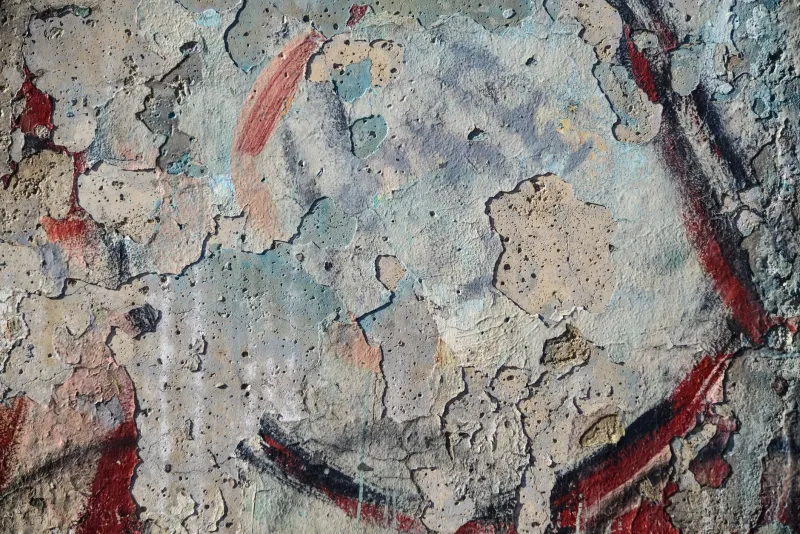
There's a moment on every mural audit when someone has to be the bad guy. For Dana Okafor, it usually comes with a color chart in one hand and a photo from three years ago in the other. "This was crimson," she'll say, pointing at a patch of salmon that used to be the centerpiece of somebody's homage to Bed-Stuy. "That's not weathering. That's a lie."
Okafor and her partner, mural conservator Ray Delgado, have spent the past year and a half doing something almost nobody in public art bothers to do: going back. Wall by wall, borough by borough — okay, mostly just Brooklyn — the pair graded 40 outdoor murals on a five-point scale for fade, chalking, cracking, and adhesion. Their goal wasn't art criticism. It was consumer reporting, dressed in paint-spattered Carhartts.
The question underneath all of it: when a city cuts a $60,000 check for a mural, what exactly is it buying? Five years of color, or three?
The Audit Nobody Asked For
Most public art programs have a maintenance clause on paper and nothing in the field. A mural goes up, there's a ribbon, maybe a hashtag, and then everyone quietly hopes the wall holds. Okafor and Delgado's audit — which they're calling the Fade Test, naturally — started because a BID in Williamsburg asked them to assess one wall and kept calling back.
Their methodology is refreshingly unglamorous. Every mural gets a colorimeter reading at fixed points (shade side, sun side, mid-tones), a tape-pull adhesion test, and a chalk rating done the old-fashioned way: rub a white cloth on the wall and see what comes off. They log substrate — brick, CMU, poured concrete, stucco — plus primer type if the artist can remember, which they usually can't.
"Half the time the paint data sheet is a PDF nobody saved," Delgado says. "So we're reverse-engineering the wall. You learn to read failure like handwriting."
The Product That Fails Fastest Is the One Cities Keep Buying
Here's the finding that made a couple of municipal art coordinators visibly wince: the "premium" exterior acrylic line most commonly specified in city RFPs chalked faster than the mid-tier product sitting two shelves down at the same art supply store. On sun-blasted south-facing walls, the premium line lost measurable gloss and color density in under 30 months. The mid-tier stuff, applied over a proper masonry primer, was still reading true at year five.
The culprit, Delgado explains, isn't quality so much as chemistry and marketing. Some of the high-end lines are formulated for canvas and panel work — great flexibility, great for gallery boards, terrible UV binder package for raw masonry. "Artists see the price tag and assume it's tougher," he says. "It's just more expensive. Those are different things."
Other findings worth stealing for your next commission:
- Primer beats paint, every time. The single biggest predictor of a mural surviving five winters wasn't the topcoat brand — it was whether someone spent a day rolling a breathable masonry primer first. Walls that skipped it showed efflorescence blooming through the paint by year two, pushing color off in plates.
- Brick is a trap; CMU is a friend. Old soft brick moves, salts, and sheds. Painted CMU blocks, sealed properly, were the most stable substrate in the whole audit.
- Dark backgrounds are a budget line. Murals with big black or deep blue fields faded visibly faster at the edges of those shapes, because that's where film thickness thins. Artists who did a second pass on darks bought themselves years.
- The van wins again. Two murals got refresh coats by the original artists using basic, boring, hardware-store exterior acrylic. Both outperformed walls painted once with fancy stuff.
What the Data Says Cities Should Actually Write Into Contracts
Okafor's pitch to municipalities is simple: stop specifying brands and start specifying outcomes. Require a primer layer on masonry. Require a maintenance photo at year one, two, and five — shot from the same spot, same light. And budget the touch-up fund at signing, not after the wall starts looking haunted.
"The cheapest mural is the one you only paint once," she says. "Every city in America already knows this about crosswalks. Murals just haven't gotten the memo."
There's a philosophical wrinkle, of course. Street culture has always accepted impermanence — the buff, the burn, the next writer over everything. A conservation crew chasing fade curves can feel like the opposite of the whole point. Delgado has heard the critique. His answer: he's not trying to make walls immortal. He's trying to make sure that when a piece fades, it fades because somebody chose a five-year wall, not because a product label oversold a binder.
On a gray Tuesday in Bushwick, we watched the pair finish an audit on a five-year-old portrait piece that had gone soft and chalky at the edges. Okafor logged the numbers, snapped her reference photo, and gave the wall a flat 2 out of 5.
"Good bones, wrong paint," she said, packing up the colorimeter. "Somebody paid gallery prices for a parking lot."